Take the best photos,
sell the pile faster.
Buyers commit before they ever step on the lot. A handful of good photos answer the only questions that matter: how big is it?, what does it look like up close?, and can I get my truck to it?
Add something for scale to the picture
The number-one reason a buyer hesitates is uncertainty about size. Drop something familiar in every wide shot — a pickup truck, a hard hat, a shovel, a 5-gallon bucket — anything a buyer instantly recognizes the size of.
Best of all: have a friend or colleague stand at the pile holding a survey grade rod. The rod’s standardized length and high-contrast markings give buyers a clean, unambiguous size reference at a glance — turning “120 CY of topsoil” into something they can visualize from their phone.
Pro tip: have your helper hold the rod vertically, fully extended, and stand where they’re fully visible — not in front of the pile, but at its edge so both the rod and the pile read cleanly in the frame.
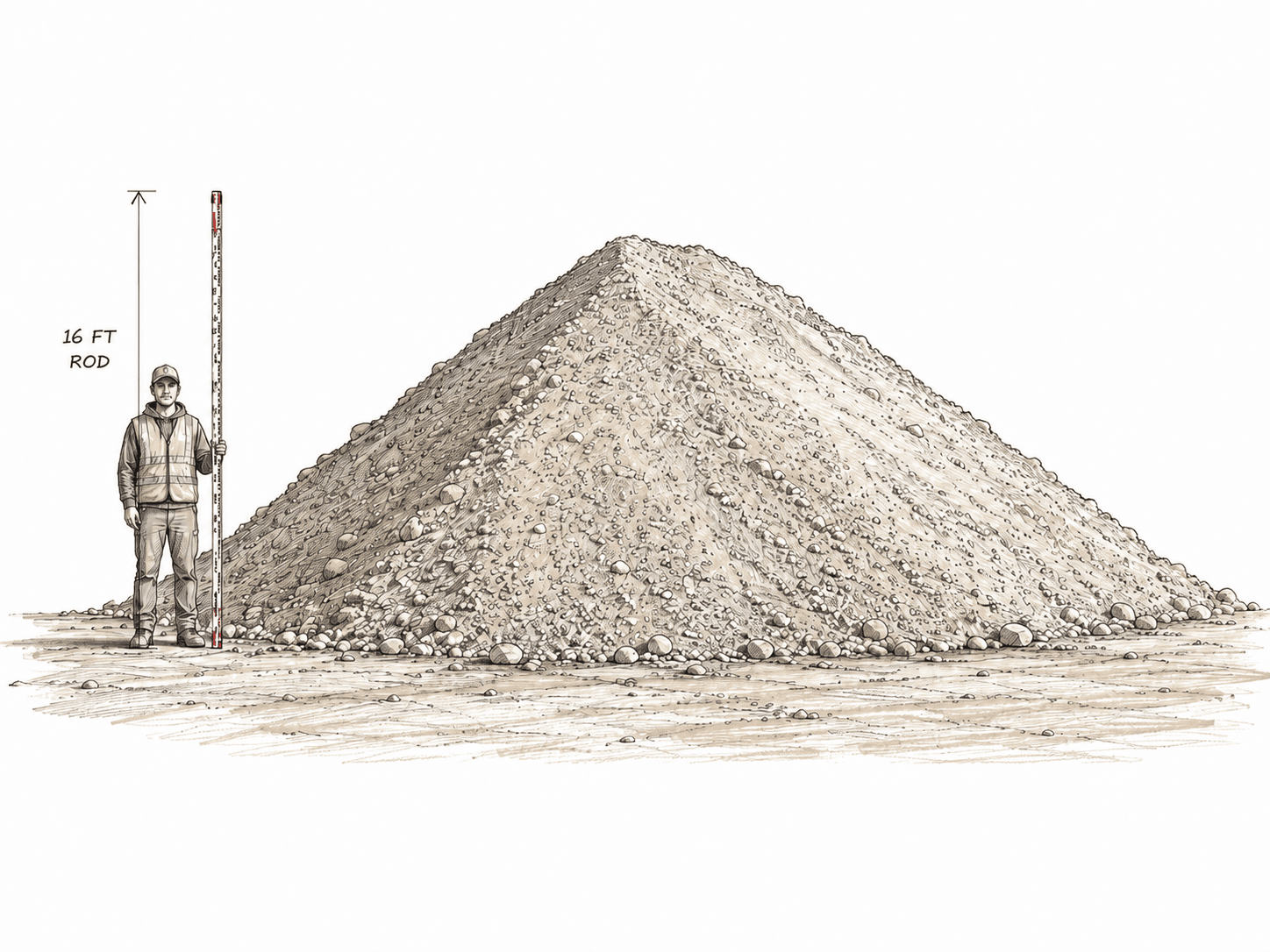
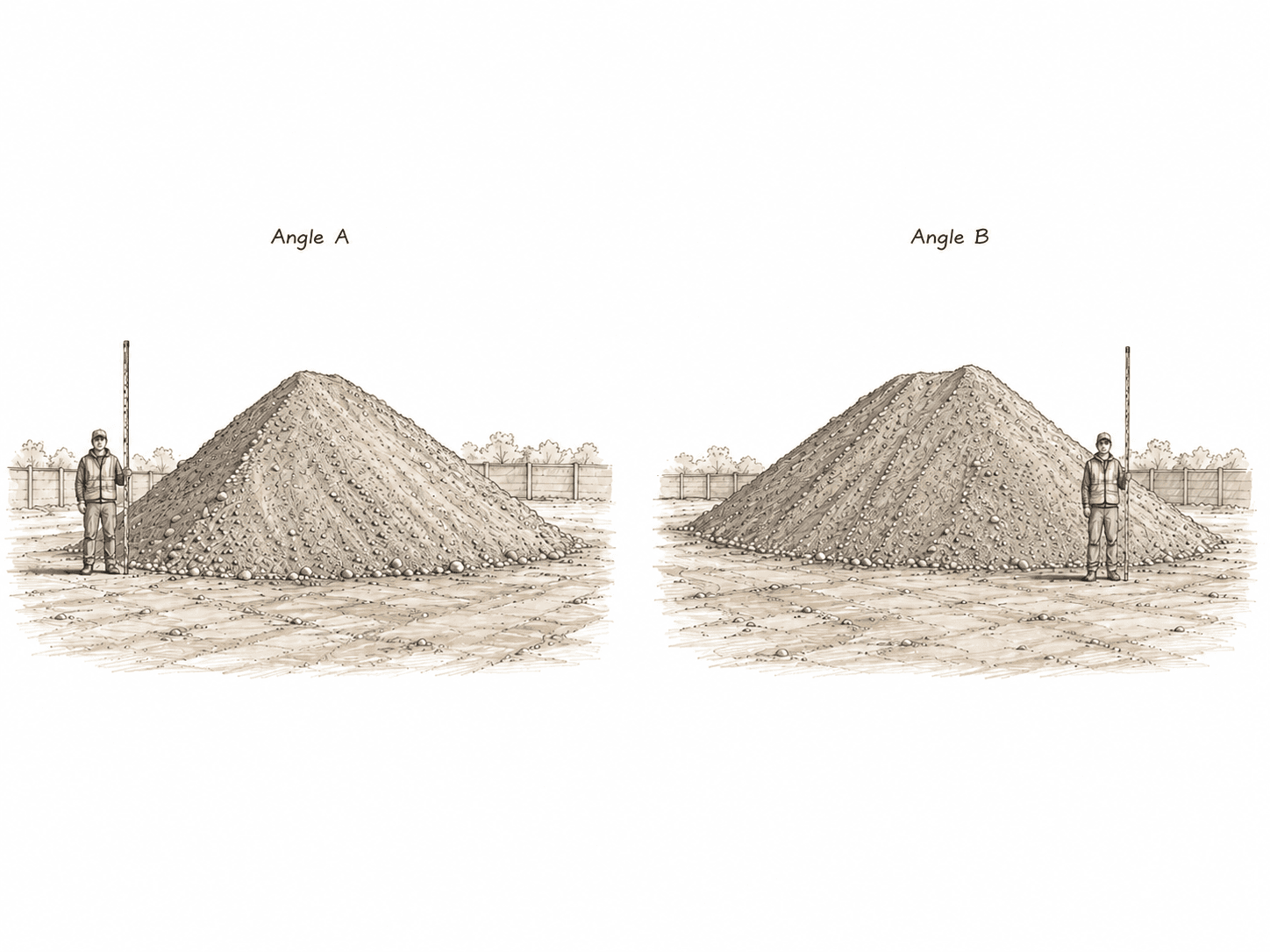
Two wide shots of the stockpile
Take two photos from different angles, far enough back that the entire pile is in frame and your helper with the survey rod is clearly visible. Don’t crouch — stand tall, hold the phone at chest height, and back up until you can see the whole thing.
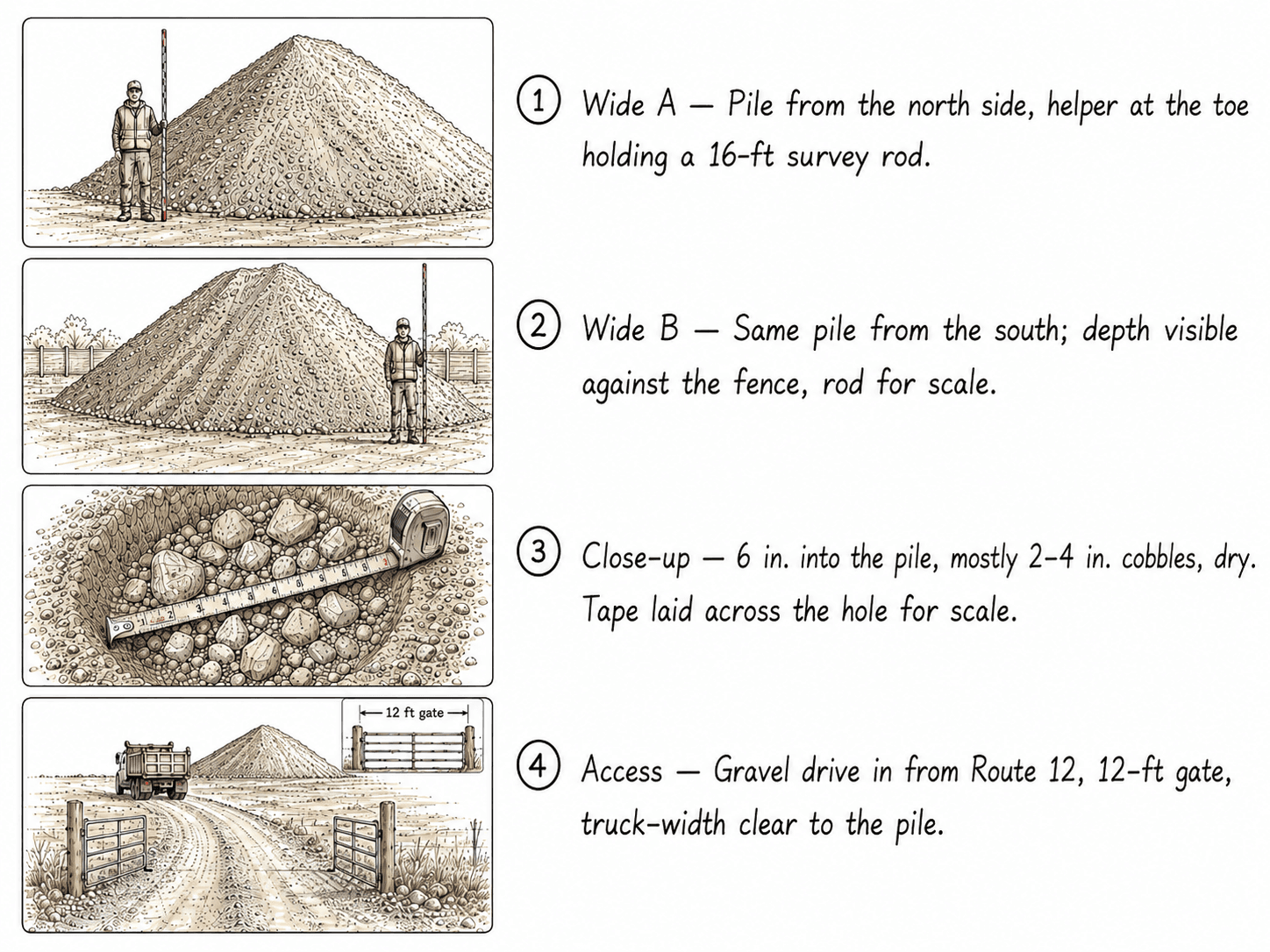
- First wide: from one side of the pile. Person with rod at the toe of the pile, fully visible in the frame.
- Second wide:from the opposite side. Confirms the pile depth and that nothing’s hidden behind it — keep the rod in shot for a consistent size reference.
Shoot in daylight, not directly into the sun. Overcast days actually photograph piles best — no harsh shadows hiding the back half or washing out the rod.
One close-up of the material
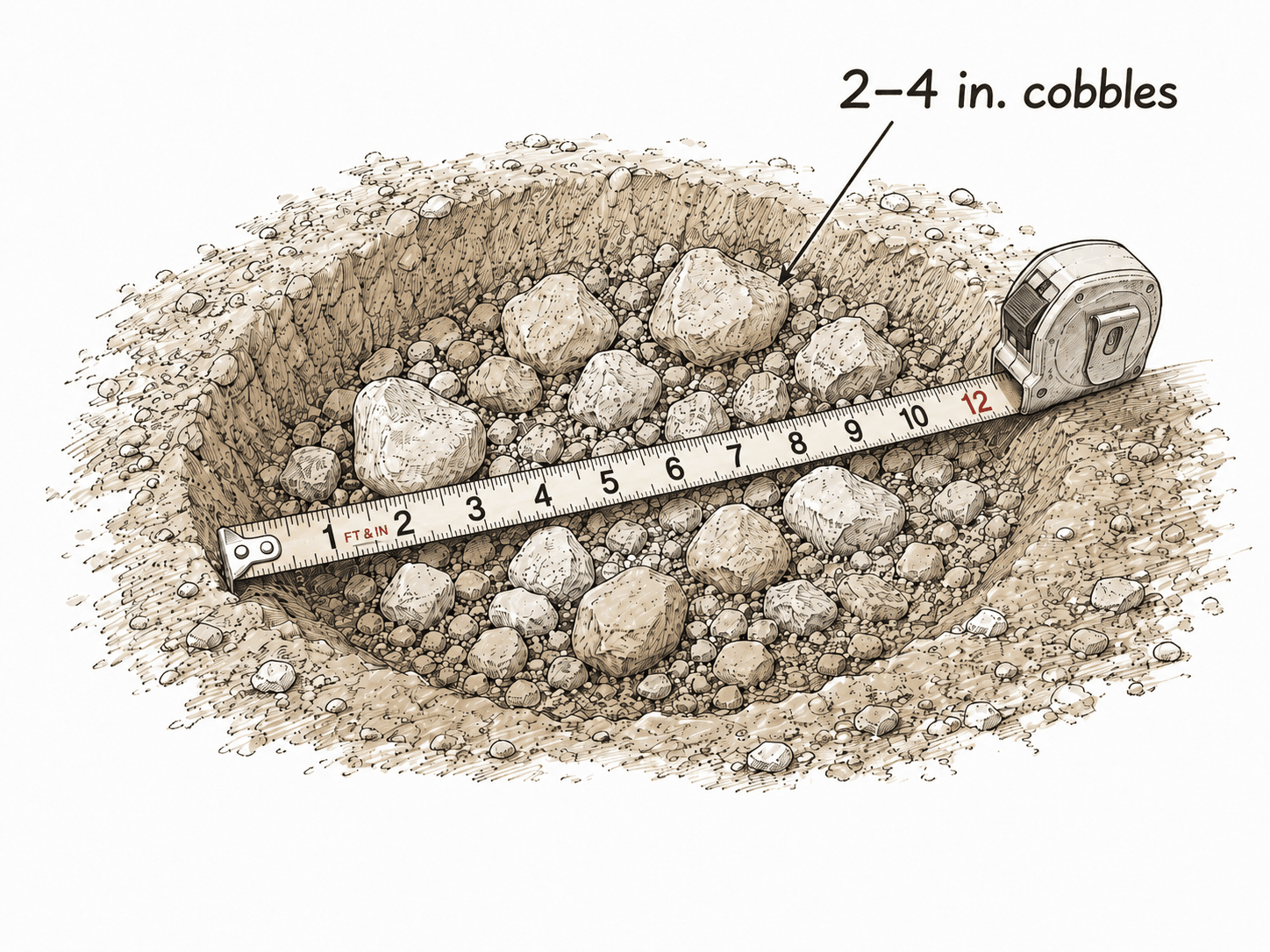
The wide shots tell buyers how much. The close-up tells them what it actually is. Dig 6–12 inches into the pile so buyers see what’s under the crust, not the weathered surface.
Lay a tape measure across the hole so the graduations sit right next to the material. For rock or cobbles, this is non-negotiable — buyers need to see grain size against a known reference.
For dirt and fill, snap the close-up at a slight angle so you capture color and texture at the same time. Straight-down photos look flat and lose detail.
Show the access to the pile
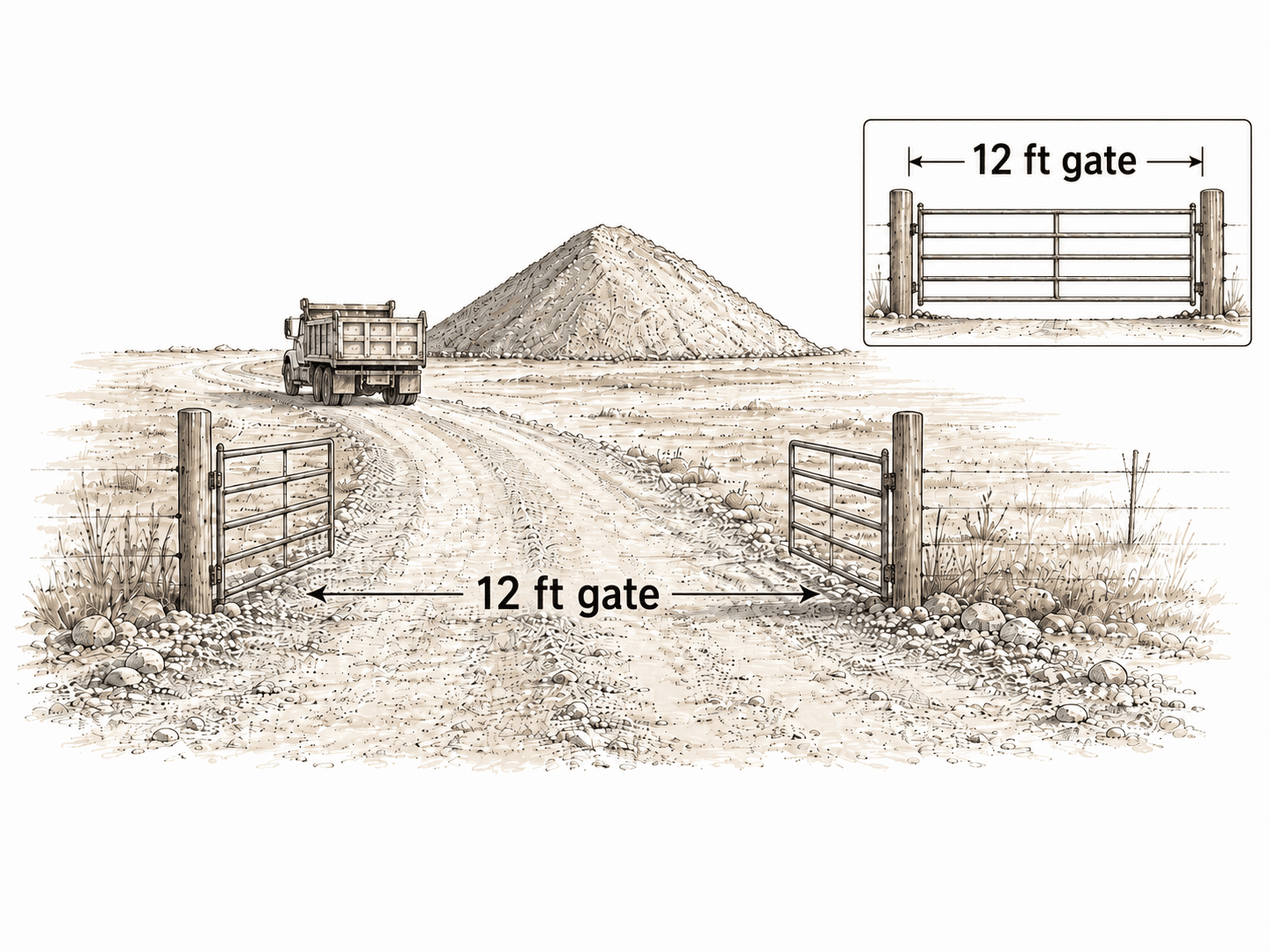
Buyers are running quantity against haul cost in their head. If they can’t see the access, they assume the worst and pass. Take one or two photos that clearly show what getting a truck to the pile looks like.
- Wider vantage: from the entrance or main approach, framing the path all the way to the pile so a driver can read the route before they pull in.
- Tight spots up close:a second photo zoomed in on anything that could surprise a driver — a gate width, a low limb, a soft shoulder, a sharp turn. Add an extra figure or close-up if one photo can’t tell the whole story.
Be honest about access. A buyer who shows up and can’t reach the pile won’t come back — and they’ll tell other buyers.
Writing the description
Every photo on SpoilSwap requires a short description. Treat it like a caption a buyer will read at 7 a.m. on their phone — short, plain, specific.
- “Pile from the north side, helper at the toe holding a 16-ft survey rod.”
- “Same pile from the south — depth visible against the fence, rod for scale.”
- “Close-up: 6 in. into the pile, mostly 2–4 in. cobbles, dry. Tape laid across the hole for scale.”
- “Access: gravel drive in from Route 12, 12-ft gate, truck-width clear all the way to the pile.”
Skip the marketing speak. Buyers’ eyes glaze over at “quality fill, great condition.” Tell them what they would see if they were standing there.
Got the photos? List the pile.
Open the new-material form, drop your photos in, write one line for each, and your listing is live on the map.
List your material →← Back to the field guide